SAFE ECONOMY ROUTE · CHECKED SEP 3, 2026
How to Make Money &
Use Cooking Safely
A reliable How to Fish economy starts with repeatable ordinary catches, visible value inspection, controlled cooking, and strict separation of quest objects. This guide deliberately avoids an unverified “best fish” price table or Casino profit promise. It shows how to stabilize the Lighthouse opening, decide whether to eat, sell, or preserve a catch, use an unlocked grill without destroying progression, and treat Killscore as a bonus rather than required income.
1. Stabilize hunger before optimizing profit
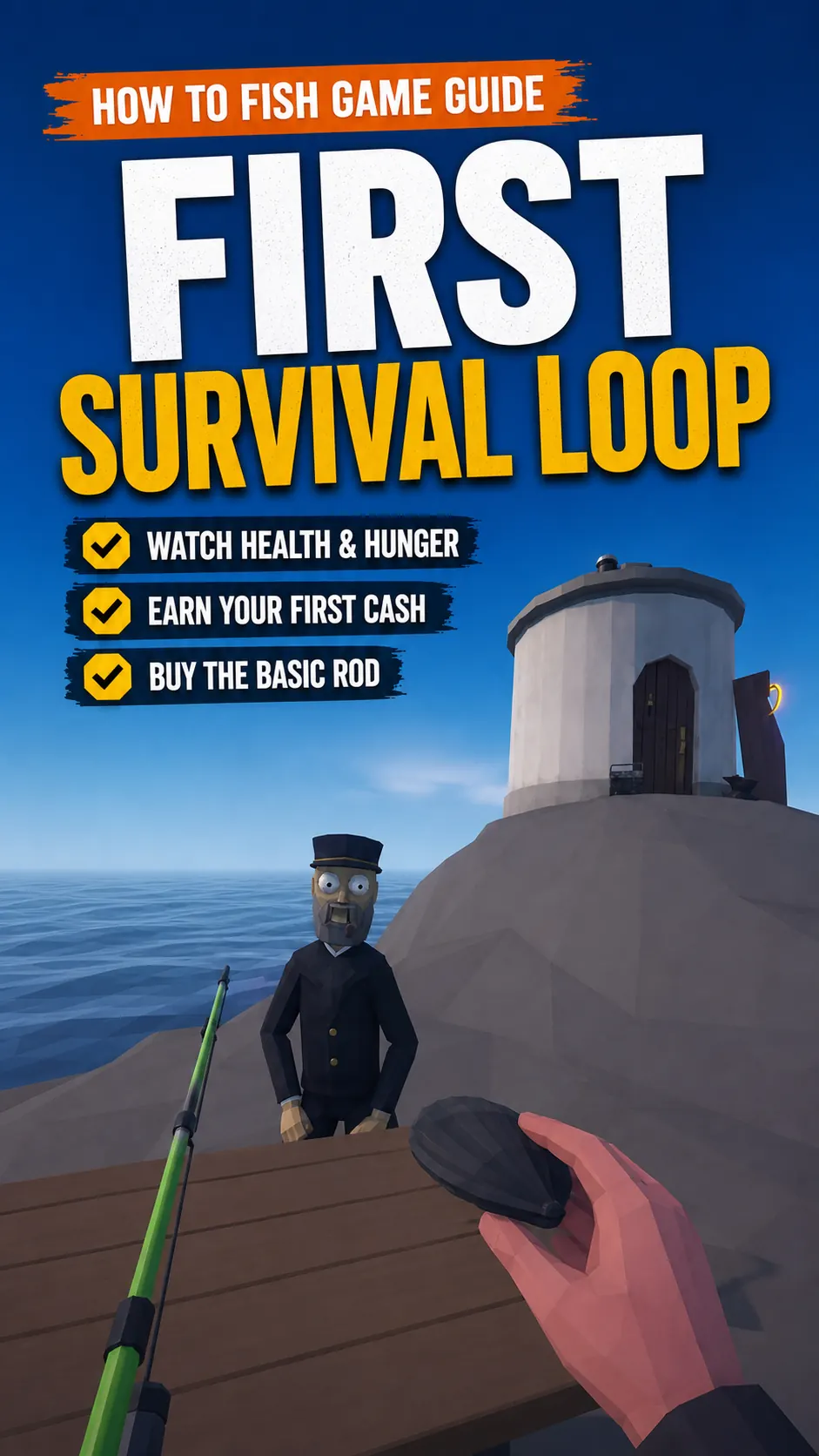
At Lighthouse, collect nearby Clams and complete the opening instructions before wandering. Buy the first rod through normal progression, make short shore casts, pull catches onto stable ground, subdue them, and inspect the visible value. Keep one replaceable edible catch instead of selling the entire inventory. A player who is starving, unarmed, or forced into a risky recovery trip does not have a profitable loop.
Use close-shore fishing to reduce travel and retrieval time. The Patch 1.0.10 practical recording also shows releasing an unwanted hooked catch, but the exact input is verified for keyboard and mouse only. Use the current control menu if you play on controller. Release is useful when the catch would waste time or create danger; it is not proof that every lure is preserved or that every future patch behaves identically.
2. Decide: eat, sell, preserve, or discard
Use four inventory categories. Eat a replaceable ordinary catch when hunger or health threatens the run. Sell ordinary catches when recovery is stable and the money funds the next required rod, lure, weapon, ammunition, or boat step. Preserve anything named by the active objective, used as special bait, or required for an NPC hand-in. Release an unwanted live catch only when the current controls and lure behavior are understood.
- Read the live objective.Any named catch, body, shell, skeleton, fin, head, bucket, or key mentioned there is protected.
- Inspect before processing.Confirm identity and visible value before choosing food, shop, grill, or storage.
- Fund the next dependency.Buy the item that advances the route before optional upgrades and cosmetic experiments.
- Keep a recovery reserve.Hold enough food and replaceable equipment to survive one failed catch or boss attempt.
This system stays useful even when prices change. It prioritizes route completion and repeatable cash generation over an old ranking of fish values.
3. Protect story items from the economy loop
Never sell, eat, grill, carve, or gamble with the Empty Beer Can, Spider Crab Shell, Giant Piranha Skeleton, Carrot, Pufferfish Fin, defeated Tuna body, Albatross Head, Fish Bucket, whole Bowhead body, or Whale Fin while its route step is active. Several of these objects look like catches or body parts that could belong in the normal economy, but their story value is the next island or ending.
In co-op, appoint one carrier and have that player confirm the item before anyone opens a shop or grill. Make a clean save before named summons. After a boss, collect the unique progression result before ordinary meat. Complete the NPC hand-in and verify the next Radar marker, coordinates, key, or boat access before returning to money farming.

4. Use cooking only on replaceable catches
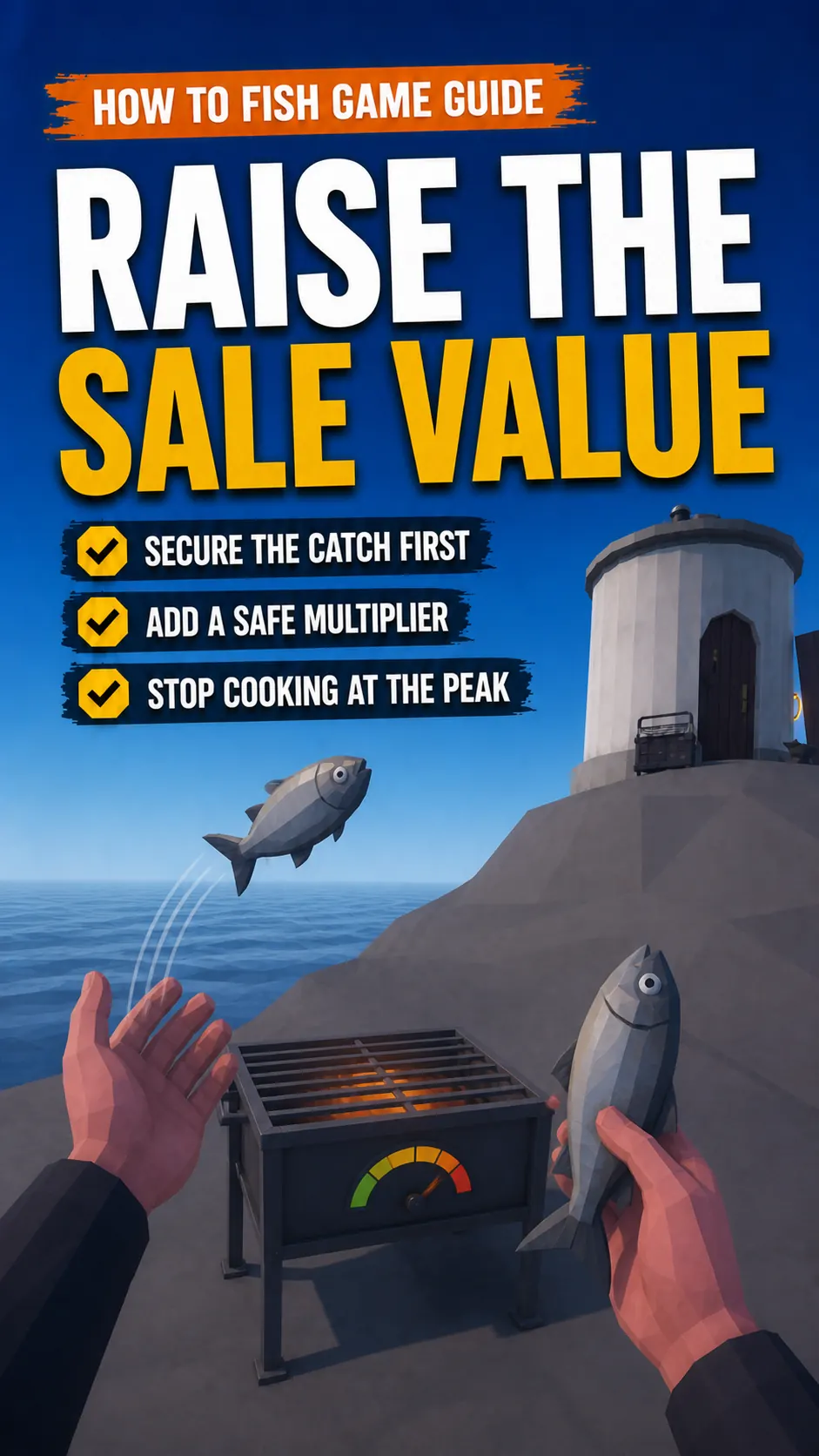
Cooking is useful after the relevant grill is active and the catch is not part of a quest. The Rocks recording shows an ordinary Red Snapper being processed at a visible 1.50× cooking state in that captured version. Treat that as a versioned example, not a promise that every species, grill, or patch has the same multiplier. Read the current interface before committing a valuable catch.
Start with a cheap, replaceable ordinary fish. Record the visible value before cooking, process one item, then inspect the result. If the value and behavior are clear, repeat with the same category. Do not infer a universal table from one example. Never test cooking with the Tuna needed for Albatross, the Bowhead body needed for the crater, or a unique boss drop.
If a grill is unavailable, continue the ordinary catch-and-sell loop instead of forcing progression. Complete the relevant island objective and reopen the NPC dialogue. A safe economy guide should not send players to bypass a story lock or risk unique inventory merely to chase a multiplier.
5. Treat Killscore as optional upside
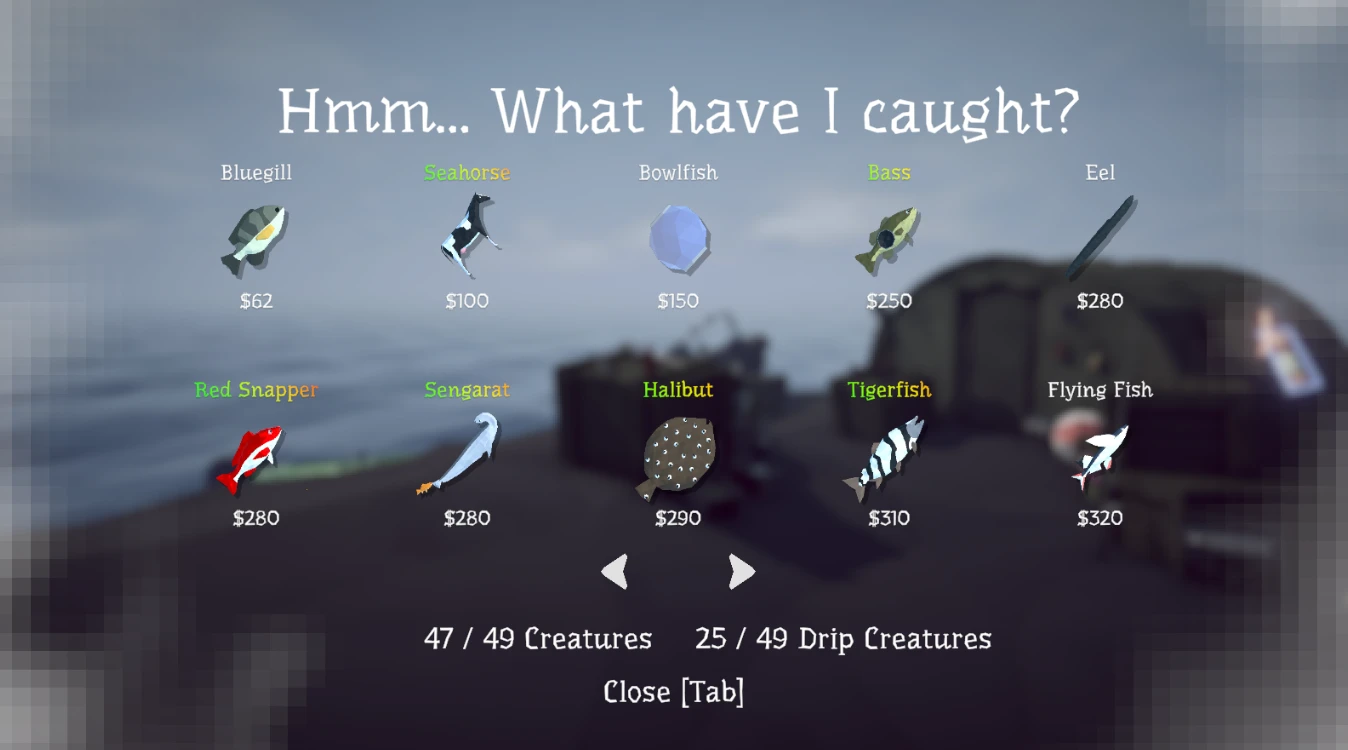
Killscore can improve the result of a catch through combat performance, and the existing achievement route distinguishes ordinary grounded kills from multiplier challenges. However, this material does not justify a permanent multiplier table for every shot, weapon, or patch. Use safe, repeatable finishing actions first. Attempt airborne, long-range, or trick-shot bonuses only with disposable catches and a controlled save.
A higher multiplier is not profit if it consumes more ammunition, causes a death, loses a weapon, or interrupts a story hand-in. Compare the whole loop: time to catch, ammunition used, food consumed, travel, risk, and final displayed value. When experimenting, change one variable at a time and repeat it before calling the method reliable.
6. Ignore unverified exploit-income claims
The retained research recording does not establish a repeatable current-patch profit exploit. Random outcomes, inventory state, host behavior, and save behavior are not sufficiently controlled. Do not take story funds, unique drops, or the money required for the next lure into an unverified test.
If you test any community money claim, use a disposable save, record the starting balance, change one variable, repeat at least three clean runs, reload normally, and verify persistence. Until that evidence exists, ordinary fishing, conservative cooking, and route progression are the truthful recommendations.